1. Home
  2. Services
  3. Shockwave Therapy

Shockwave Therapy in Seaton, SA

Shockwave therapy in Seaton, Adelaide. Non-invasive treatment for plantar fasciitis, Achilles and tennis elbow tendon pain that has not settled.

5.0 from 62 Google reviews
Shockwave Therapy at UpPlus Physiotherapy

What is Shockwave Therapy?

Shockwave Therapy, also known as Extracorporeal Shockwave Therapy (ESWT), is a non-invasive treatment that uses acoustic sound waves delivered through the skin to stimulate the body's natural healing response in injured or degenerated soft tissue. It is commonly used for stubborn, long-standing tendon and soft-tissue conditions that haven't fully responded to rest or standard physiotherapy alone.

Shockwave Therapy at UpPlus Physiotherapy

Shockwave Therapy is currently available at our Seaton clinic, delivered by our team as part of a broader physiotherapy treatment plan. Rather than being used alone, it's typically combined with hands-on treatment and exercise rehabilitation to address the underlying cause of your pain, not just the symptoms.

How Shockwave Therapy Works

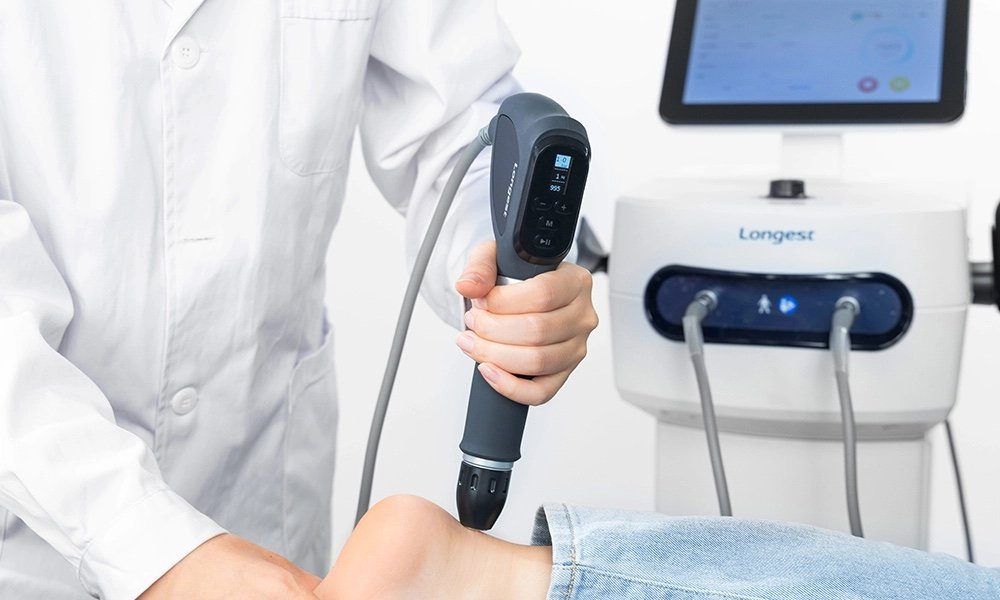
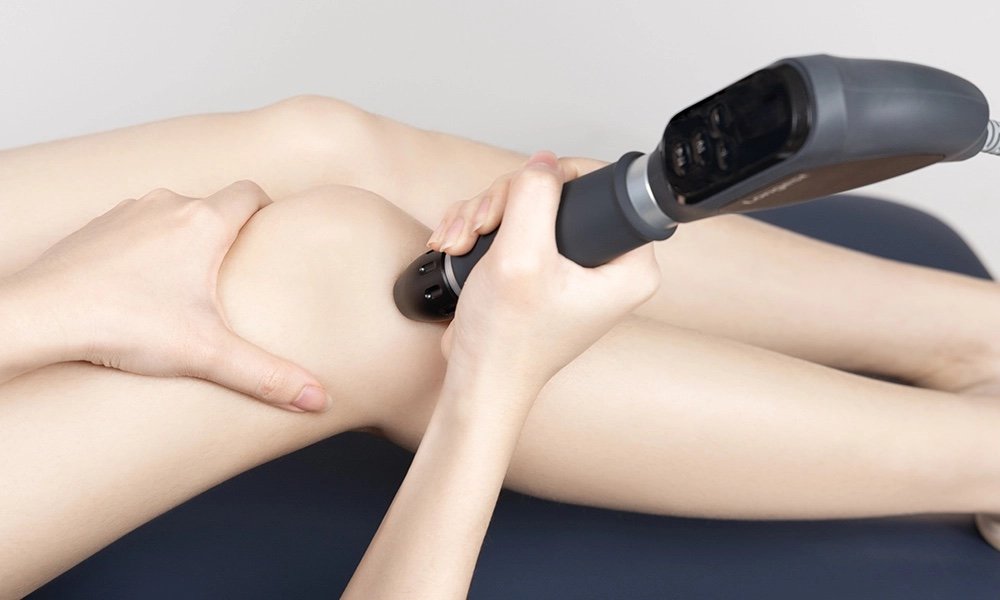
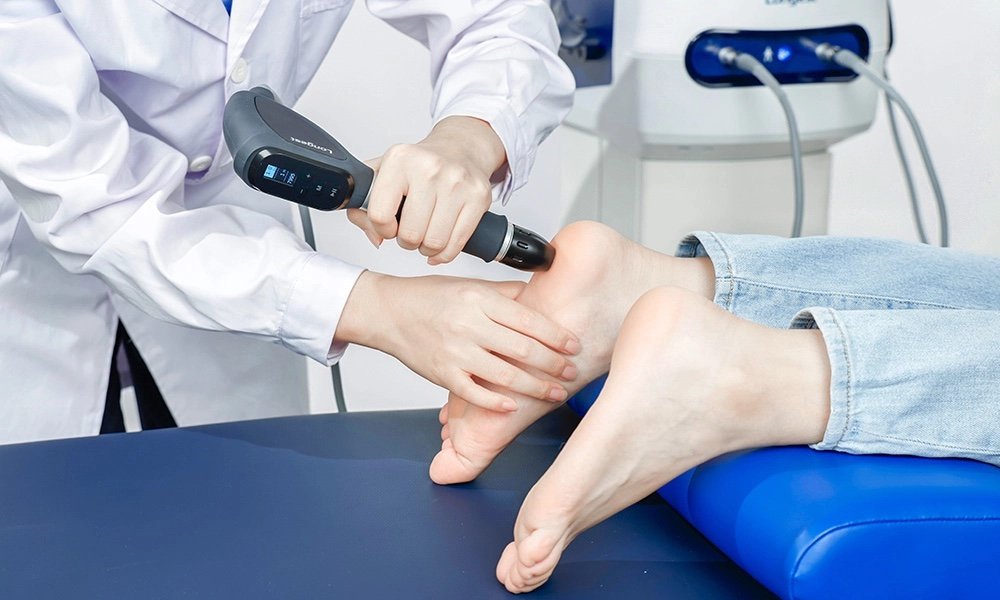
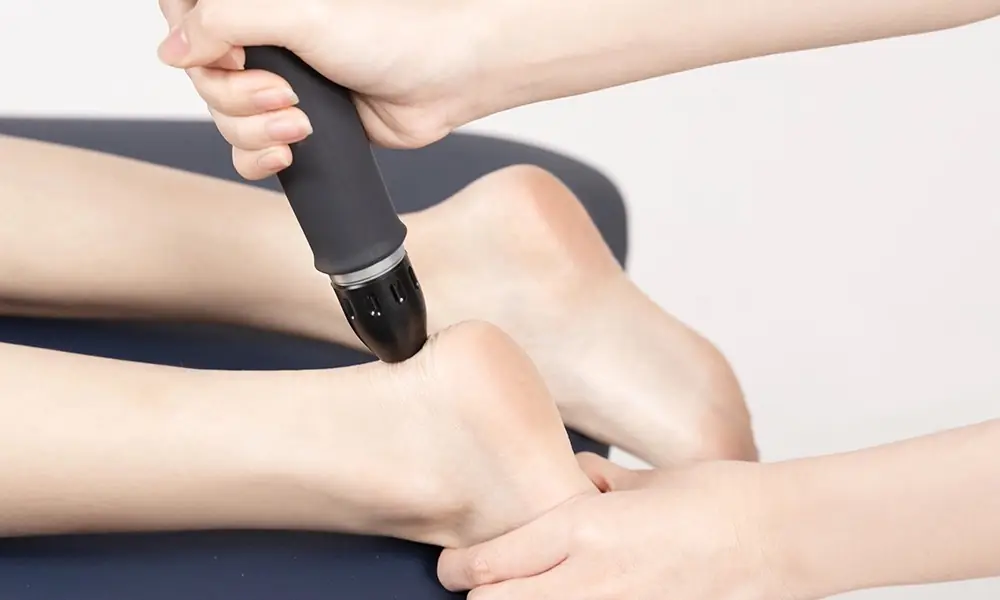
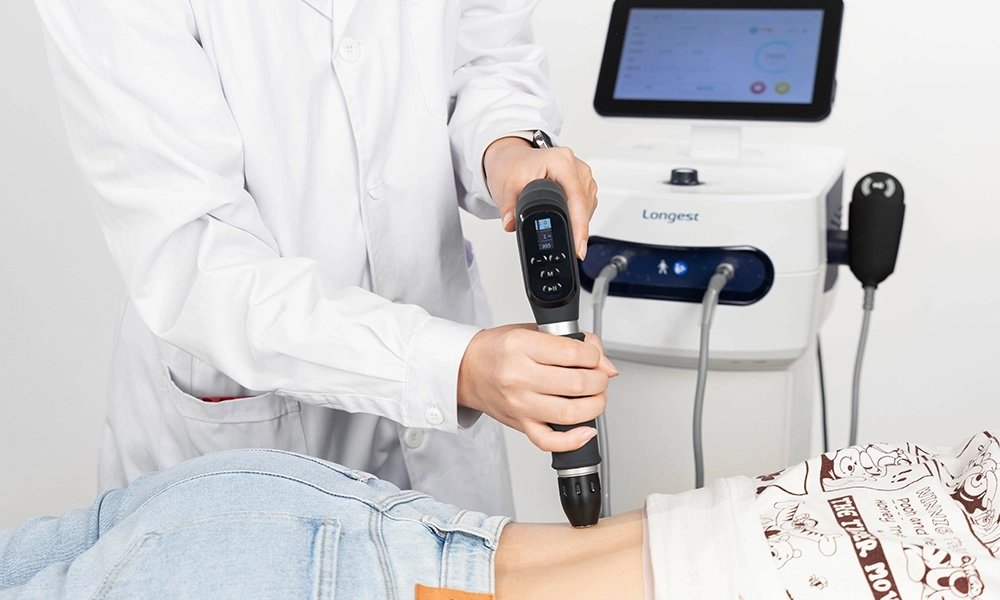
During treatment, a handheld device delivers acoustic pulses through the skin to the affected area. This mechanical stimulation increases blood flow to the region and is thought to encourage the body's own tissue-repair processes. Sessions are typically short, performed in-clinic, and don't require any anaesthetic, incisions, or downtime — you can generally return to normal activity straight after.

Conditions We Treat With Shockwave Therapy

At our Seaton clinic, Shockwave Therapy is used as part of a treatment plan for the following conditions:

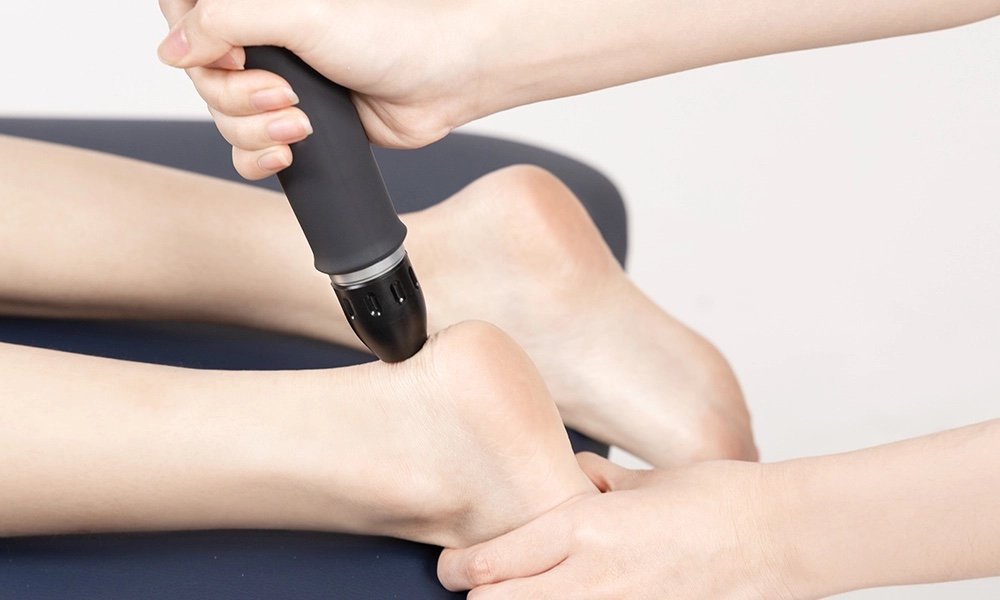
  • Plantar fasciitis – persistent heel pain, often worst on the first steps in the morning.
  • Achilles tendinopathy – ongoing pain, stiffness or thickening of the Achilles tendon.
  • Tennis elbow (lateral epicondylalgia) – pain on the outside of the elbow from repeated gripping or loading.
  • Golfer’s elbow (medial epicondylalgia) – the same problem on the inside of the elbow.
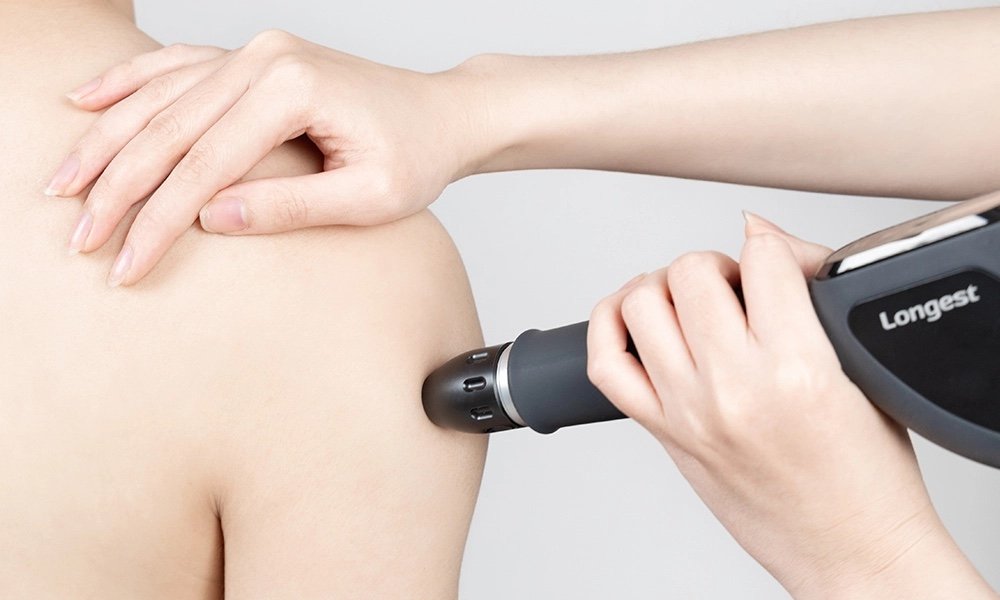
  • Calcific shoulder tendinopathy – shoulder pain associated with calcium deposits in the rotator cuff tendons.
  • Greater trochanteric pain syndrome – pain on the outside of the hip, often worse lying on that side.
  • Patellar tendinopathy (jumper’s knee) – pain at the front of the knee, just below the kneecap.
  • Shin splints (medial tibial stress syndrome) – pain along the inside edge of the shin with running.
  • Gluteal tendinopathy and other stubborn tendon problems that have not settled with loading alone.

If the problem is in your shoulder, knee or foot and ankle, those pages set out the wider picture — shockwave is one option within it, not a substitute for it.

Benefits of Shockwave Therapy

  • Non-invasive – no needles, incisions, or anaesthetic required.
  • No downtime – return to your normal activities straight after treatment.
  • Quick sessions that fit easily around an existing physiotherapy plan.
  • Can be used alongside hands-on treatment and exercise rehabilitation.
  • Low risk of side effects when delivered by a trained physiotherapist.

The Machine We Use

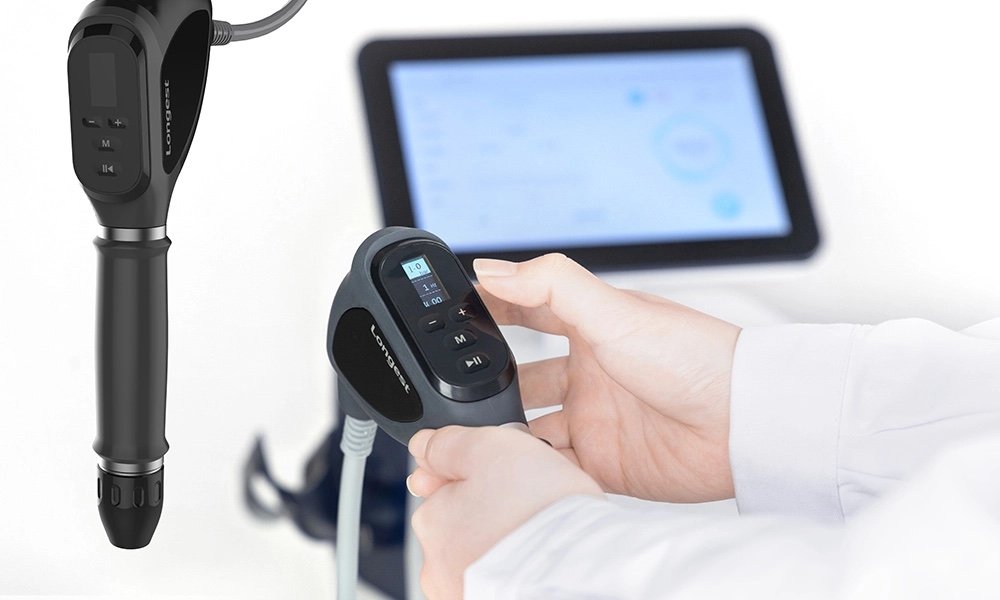
We use a Longest PowerShocker LGT-2500X. You do not need to know the model number — what matters is what it lets us do for you.

  • We can start gentle. The strength is adjustable across a wide range, so a first session on a very sore heel can be turned right down and built up as you get used to it. You are not stuck on one setting.
  • The right head for the right spot. Different attachments for different parts of the body — a narrow one to concentrate on a small tender point, a wider one to cover a broader area like a calf or a glute.
  • A separate massage handpiece. For loosening the muscle around the problem, usually before or after the shockwave itself rather than instead of it.
  • Your settings are saved. What we used last time is recorded against your file, so session four is adjusted against what actually happened in sessions one to three rather than from memory.
Type
Pneumatic ballistic radial shockwave (ESWT)
Pressure
0.3 – 5.0 Bar
Frequency
1 – 22 Hz
Output modes
Continuous, single, burst, PFM
Transmitter heads
15 mm and 20 mm radial; 6 mm focused option
Vibration handpiece
Up to 35 Hz, with 10, 25 and 40 mm heads

Where On the Body We Use It

Most of the problems shockwave suits are tendons close to the surface, which is why the same machine covers a heel, a shoulder and an elbow.

What Happens in a Session

  1. Assessment first. Shockwave is not a walk-in treatment. We examine the area, confirm the diagnosis and check that shockwave is the right choice for it. Some conditions that look similar respond to entirely different treatment.
  2. Finding the spot. The physiotherapist presses around the area to locate exactly where it is tender. That point is what gets treated, and it is not always where you assumed the problem was.
  3. Gel and transmitter. Ultrasound gel goes on the skin so the pulses transfer properly, and the transmitter head is matched to the target.
  4. The treatment. Usually between 2,000 and 3,000 pulses over roughly five to ten minutes. Intensity starts low and is increased within what you can tolerate, and we adjust as we go — you are asked throughout, not at the end.
  5. Afterwards. No anaesthetic, no recovery time, and you can drive and go back to work. We will usually ask you to avoid heavy loading of the treated tendon for about 48 hours, and we give you the exercises that do the other half of the job.

How It Feels, and How Many Sessions

Most people describe it as a strong, rapid tapping that is uncomfortable rather than painful, and it stops the moment the handpiece lifts. Some tenderness over the following day or two is common and settles on its own. If it is too much, say so — the intensity comes down and the treatment still works.

A typical course is three to six sessions, about a week apart. Improvement is usually gradual rather than immediate, and it often continues for several weeks after the last session as the tissue responds. If nothing has changed after three or four sessions we will say so and change the plan rather than book you in for more of the same.

Shockwave is not a standalone cure and we would be misleading you to present it as one. It is used to make a stubborn tendon responsive again so that the loading programme — which is what actually rebuilds the tissue — can do its work. Nearly everyone who has shockwave here also leaves with exercises.

When Shockwave Is Not Suitable

Part of the assessment is ruling it out. Tell us before we start if any of the following apply to you — some rule shockwave out entirely, others just change where and how it is used:

  • You are pregnant, or think you might be
  • You take blood-thinning medication, or have a bleeding or clotting disorder
  • There is a cancer diagnosis affecting the area to be treated
  • You have had a cortisone injection into the area in the past six weeks
  • There is an infection, an open wound or a skin condition over the area
  • You have a pacemaker or another implanted electronic device
  • The patient is a child or adolescent still growing, where the area is near a growth plate
  • You have known nerve or circulation problems in that limb

This is not a complete list and it is not a substitute for being assessed. Bring it up at your appointment and your physiotherapist will work through it properly with you.

What the Evidence Says

Being straight about this matters more than selling it. Shockwave therapy has the strongest research support for plantar heel pain, calcific tendinopathy of the shoulder and tennis elbow, where it has been studied repeatedly and is recommended in clinical guidelines for cases that have not settled with first-line treatment. For several other conditions the evidence is thinner or mixed, and honest practice is to say which situation yours falls into before you commit to a course.

Shockwave is generally considered where a problem has been going on for three months or more and has not responded to loading, activity modification and hands-on treatment. It is not usually the first thing to try on a fresh injury.

Payment Options

Shockwave Therapy is billed the same way as your other physiotherapy appointments at UpPlus — including Medicare Chronic Condition Management Plans, private health insurance (HICAPS on the spot), and DVA. See our Payment Options page for full details.

Anand Vaghasiya Nensi Vaghasiya Saloni Shah

Meet the team you will see

Every appointment is with one of our own AHPRA-registered physiotherapists. See their background, the conditions each of them focuses on, and how they approach your assessment and treatment.

Meet the team
Before you book

Common questions

What conditions can shockwave therapy treat?

We use shockwave as part of treatment for plantar fasciitis, Achilles tendinopathy, tennis and golfer’s elbow, calcific shoulder tendinopathy, greater trochanteric pain syndrome, patellar tendinopathy and shin splints. It is aimed at stubborn tendon and soft-tissue problems that have not settled with loading and hands-on treatment. Your physiotherapist will confirm whether it suits your particular problem at an assessment.

Is shockwave therapy painful?

Most people describe it as a strong, rapid tapping that is uncomfortable rather than painful, and it stops the moment the handpiece lifts. We start at a low intensity and build within what you can tolerate, and we ask you throughout rather than at the end. Some tenderness over the next day or two is common and settles on its own.

How many sessions will I need?

A typical course is three to six sessions about a week apart. Improvement is usually gradual and often continues for several weeks after the final session. If nothing has changed after three or four sessions we will tell you and change the plan rather than book more of the same.

What machine do you use?

A Longest PowerShocker LGT-2500X, a pneumatic radial shockwave unit delivering 0.3 to 5.0 Bar at 1 to 22 Hz, with interchangeable transmitter heads and a separate vibration handpiece. The wide range matters because it lets the same machine treat a very painful heel at a first session and a thick, stubborn tendon later on.

Is shockwave therapy covered by Medicare or private health?

Shockwave sessions are billed the same way as any other physiotherapy appointment here. That includes Medicare Chronic Condition Management Plan referrals, which we bulk bill in full, private health extras claimed on the spot through HICAPS, DVA and NDIS. There is no separate charge for using the machine.

Who should not have shockwave therapy?

Tell us before we start if you are pregnant, take blood-thinning medication or have a clotting disorder, have a cancer diagnosis affecting the area, have had a cortisone injection there in the past six weeks, have an infection or open wound over the area, have a pacemaker or another implanted device, or have nerve or circulation problems in that limb. Some of these rule shockwave out; others simply change how it is used. Your physiotherapist works through this with you at the assessment.

Do I need a referral?

No. You can book a physiotherapist directly in Australia. A GP referral is only needed if you want the appointment funded under a Medicare care plan, or through DVA.

Which UpPlus location offers shockwave therapy?

Shockwave therapy is available at our Seaton clinic, 177 Trimmer Parade, with free off-street parking. Get in touch if you would like to check availability at our other locations.
Book an appointment

Ready when you are — no referral needed, and it takes about a minute.

Trouble with the form? Open booking in a new tab or call 0403 907 587.

Our partners

See all partners

Health funds we accept Claim on the spot with HICAPS

All health funds