Been told you have "cervical stenosis" on a scan? It means the space for the nerves in your neck is narrower than usual. For many people it causes no trouble at all; for some it matters a great deal. Here is how to tell the difference, the warning signs to know, and where physiotherapy fits.
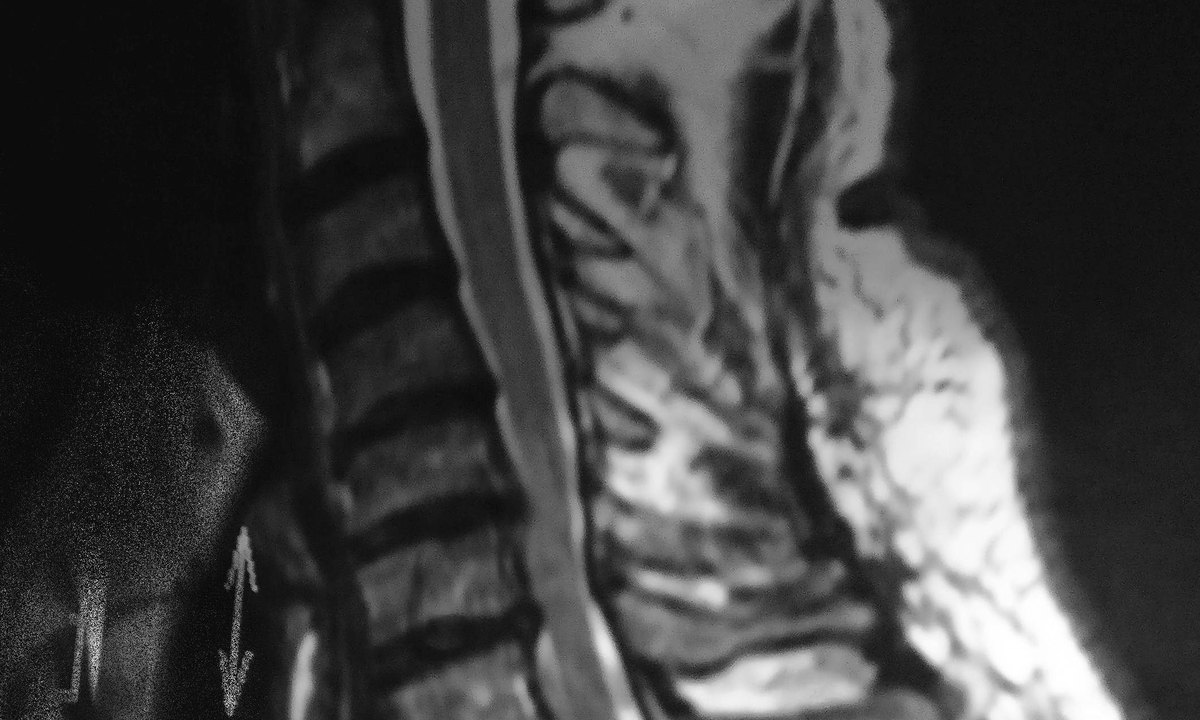
The bones of your neck form a tunnel, the spinal canal, that protects the spinal cord. Nerve roots leave through smaller side openings to supply your arms. With age, the discs, joints and ligaments of the neck change, and that tunnel or its side openings can become narrower. That narrowing is called cervical stenosis.
Narrowing on a scan is common and often harmless. What matters is whether it is pressing on a nerve root, on the spinal cord itself, or on nothing at all. That decides whether you need reassurance and exercise, closer monitoring, or a surgical opinion.
At a glance
- What it is: narrowing of the spinal canal or nerve openings in the neck, usually from age-related changes
- Very common on scans: cord compression without symptoms is found in about a third of people over 60
- Two main effects: a pinched nerve root (arm pain, tingling) or pressure on the spinal cord (myelopathy)
- Myelopathy warning signs: clumsy hands, trouble with buttons or writing, unsteady walking
- Treatment: depends on symptoms; mild cases may suit supervised rehab, moderate and severe cord compression usually surgery
- See a doctor promptly if your hands or walking are getting worse
Why the neck canal narrows
A neurosurgical review describes several age-related changes that can narrow the canal, often together:
- Disc changes: discs lose height and can bulge backwards
- Bone spurs: the joints and vertebral edges thicken (spondylosis)
- Thickened ligaments: the ligament at the back of the canal (ligamentum flavum) can thicken or buckle
- Ossified ligament: less commonly, the ligament at the front of the canal turns to bone (OPLL)
Some people are also born with a narrower canal, which leaves less room to spare as these changes happen.
Narrowing on a scan is often not the problem
This is worth knowing before you worry. A 2022 review of the natural history of these changes reported that spinal cord compression without any symptoms is found in about 24% of healthy people, rising to about 35% of people over 60.
In other words, a report that says "stenosis" or even "cord compression" does not, on its own, mean you need treatment. It has to be matched with your symptoms and an examination.
The two ways stenosis causes symptoms
1. Pressure on a nerve root (radiculopathy)
When the side openings narrow, a nerve root leaving the neck can be pinched. That causes pain, pins and needles, numbness or weakness running down one arm, often in a particular band. Most people with radiculopathy improve without surgery. Read our full article on cervical radiculopathy.
2. Pressure on the spinal cord (myelopathy)
When the central canal narrows enough to affect the spinal cord, it is called degenerative cervical myelopathy (DCM). This is the type to take seriously, because the cord carries signals to both arms and both legs. A BMJ clinical review explains that DCM is often recognised late, because the early signs are subtle and overlap with other conditions. It cites a study in which diagnosis took an average of more than two years from the first symptoms, and many patients were first diagnosed with, and sometimes treated for, carpal tunnel syndrome.
Warning signs of myelopathy
- Clumsy hands: dropping things, trouble with buttons, jewellery clasps, keys or handwriting
- Numbness or tingling in both hands, or in a "glove" pattern rather than one nerve's area
- Unsteady walking, feeling off balance, or more trips and falls
- An electric-shock feeling down the spine or limbs when you bend your neck forward
- Stiff or heavy legs
- Later, changes in bladder control
Neck pain may or may not be present. Some people with significant cord compression have very little neck pain at all.
How it is diagnosed
Diagnosis starts with a careful neurological examination: strength, sensation, reflexes, hand dexterity, balance and walking. If myelopathy is suspected, an MRI of the neck shows how narrow the canal is and whether the cord itself has changed. A physiotherapist who finds signs of myelopathy will refer you to your GP or a spinal specialist for imaging and review rather than simply treating the neck.
What happens over time?
The course varies a lot from person to person. The 2022 natural history review found that among people with symptomatic myelopathy who were managed without surgery, between 20% and 62% had neurological deterioration within 3 to 6 years. Some stay stable for long periods; others slowly worsen. That uncertainty is why monitoring matters.
Treatment
What the guideline recommends
An international clinical practice guideline for degenerative cervical myelopathy, developed by a multidisciplinary group including Australian specialists, recommends:
- Moderate and severe myelopathy: surgery is recommended
- Mild myelopathy: either surgery or a supervised trial of structured rehabilitation; if non-operative care is chosen, surgery is recommended if symptoms worsen and suggested if they do not improve
- Cord compression on a scan without symptoms: no preventive surgery, but education about warning signs and regular follow-up
- Cord compression plus nerve-root symptoms: a higher risk of developing myelopathy, so either surgery or careful non-operative care with close follow-up
Surgery versus conservative care for mild disease
A Czech randomised trial followed people with mild to moderate, non-progressive myelopathy for 10 years, comparing conservative management with surgery. On average, the two groups did not differ significantly in function, walking or daily activities, and in both groups some people improved and some worsened. The authors noted the study was small and cannot settle the question on its own, which is why the guideline leaves room for an individual decision in mild cases.
Where physiotherapy fits
Physiotherapy has a role for people with nerve-root symptoms, for neck pain and stiffness with stenosis on a scan, and as the supervised rehabilitation option for selected people with mild myelopathy under medical oversight. A physio can help with:
- A thorough neurological screen at the start and at regular reviews
- Education about which symptoms to watch for and when to seek help
- Gentle neck and upper-back mobility, and posture-friendly habits for work and screens
- Strengthening of the neck, shoulders and upper back
- Balance and walking training to reduce falls risk
- Hand dexterity exercises
With known cord compression, forceful neck manipulation is avoided, and any treatment is gentle and closely monitored.
Everyday tips
- Keep active; walking is good for general health and balance
- Avoid long periods with the neck held far back, such as painting ceilings, and avoid sustained extreme positions
- Set up screens at eye level to reduce prolonged neck bending
- Keep a simple diary of hand function and walking so changes are easier to spot
- Take care with falls risks at home: rugs, poor lighting, stairs
Myths about cervical stenosis
- "Stenosis on my scan means I need surgery." Not on its own; many people with narrowing have no symptoms.
- "No neck pain means it is not serious." Myelopathy can cause hand and walking problems with little neck pain.
- "It is just arthritis in my hands." Clumsy, numb hands in both hands deserve a check of the neck.
When to see a doctor
See your GP promptly, and ask about a spinal assessment, if you notice:
- Increasing clumsiness of the hands or trouble with fine tasks
- Worsening balance or walking
- Numbness in both hands
Seek urgent medical attention for rapidly worsening weakness, repeated falls, or new problems with bladder or bowel control, or after a fall or blow to the head or neck if you have known stenosis and develop new symptoms.
How UpPlus Physiotherapy helps
At UpPlus Physiotherapy in Seaton, our physiotherapists assess neck and arm symptoms with a careful neurological examination, explain what your scan does and does not mean, and work alongside your GP or specialist. For nerve-root symptoms and neck pain, we build a graded exercise program; where we find signs of myelopathy, we make sure you are referred for the right medical review.
Read more about spinal stenosis, cervical radiculopathy and neck arthritis.
Finding a physio near me for neck stenosis
Look for a physio who examines your nerves and walking as well as your neck, explains your scan in plain language, uses gentle treatment, and knows when to refer you on.
Our clinic is at 177 Trimmer Parade, Seaton, a short drive from Woodville, Findon, West Lakes, Grange and Henley Beach.
Physio take-home message
- Cervical stenosis is a narrowing of the neck canal, very common with age.
- Narrowing on a scan often causes no symptoms and needs matching to an examination.
- Clumsy hands and unsteady walking are the key warning signs of cord compression.
- Mild cases may suit supervised rehab; moderate and severe myelopathy usually needs surgery.
- Worsening hands, walking or bladder needs prompt medical review.
If you have neck or arm symptoms, or a scan report you would like explained, our physiotherapists can help. Book online or call 0403 907 587.
This article is general information, not a diagnosis or a substitute for an individual assessment. If you are unsure about your symptoms, see a health professional.