An ache around or behind the kneecap that flares on stairs, squats or after sitting through a movie? You may have been told it is chondromalacia patellae. Here is what that term means, why most specialists now call it patellofemoral pain, and the exercise approach the research supports.
Chondromalacia patellae literally means "softening of the cartilage under the kneecap". The term has been used for decades, often loosely, for pain at the front of the knee. Today most researchers and physios use the broader term patellofemoral pain, because how the cartilage looks on a scan does not neatly match how much the knee hurts, and the treatment is the same either way.
It is one of the most common causes of knee pain, and while it can be stubborn, most people improve with the right exercise program.
At a glance
- What it is: pain around or behind the kneecap, where it glides over the thigh bone
- How common: over a fifth of people in the general population report it each year, and more teenagers
- Typical triggers: stairs, squatting, kneeling, running, jumping, sitting with knees bent
- Main treatment: exercise, especially hip and knee strengthening combined
- Also helpful: foot orthoses in the short term, and combined approaches
- Not recommended on their own: knee mobilisations alone, or machines such as ultrasound
The kneecap joint
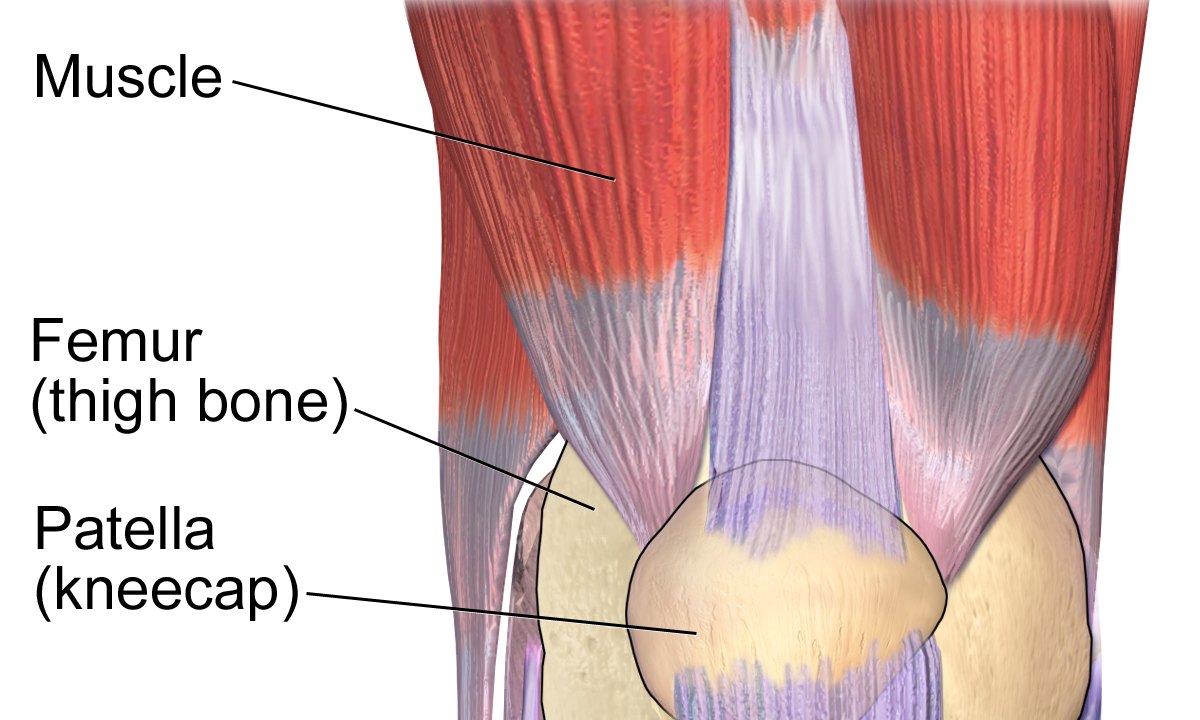
Your kneecap (patella) sits in a groove at the end of your thigh bone. As you bend and straighten the knee, it glides up and down that groove, guided by the quadriceps muscle above and the patellar tendon below. The underside of the kneecap is lined with thick cartilage, because the forces through this joint rise sharply when you squat, climb or land from a jump.
Chondromalacia or patellofemoral pain?
Cartilage softening and wear under the kneecap is common, including in people with no knee pain at all, and some people with significant pain have little visible change. That is why the label is less important than how the knee behaves. Whether your report says chondromalacia or not, the approach below is the one the guidelines recommend.
How common is it?
A systematic review of 23 studies found an annual prevalence of patellofemoral pain of about 22.7% in the general population and 28.9% in adolescents. It is also very common in runners, military recruits and teenagers in sport, particularly girls.
Symptoms
The clinical practice guideline published in the Journal of Orthopaedic and Sports Physical Therapy describes patellofemoral pain as:
- A poorly defined ache around or behind the kneecap
- Coming on gradually, or sometimes more suddenly
- Worse with activities that load the bent knee: squatting, stairs (often going down), prolonged sitting, running and jumping
- Able to come and go, and in some people to persist for years
You may also notice clicking or grinding under the kneecap. On its own, painless grinding is very common and not a cause for worry.
What contributes to it?
- Load: a sudden increase in running, hills, stairs, squats or jumping
- Strength: weakness in the quadriceps and the hip muscles that control the knee
- Movement: the knee drifting inwards during squats, landing or running
- Feet: for some people, the way the foot rolls in
- Growth and sport: teenagers in a growth spurt or a heavy training season
How it is diagnosed
Patellofemoral pain is diagnosed mainly from the history and examination: where the pain is, what provokes it (a squat often reproduces it), and ruling out other causes such as a meniscus tear, ligament injury, patellar tendinopathy or arthritis. X-rays and MRI are not usually needed to start treatment, but may be used if the knee locks, gives way, swells a lot, or does not improve.
Treatment: what the international consensus recommends
An international group of patellofemoral pain researchers and clinicians meets regularly to review the evidence. Their 2016 and 2018 consensus statements, the second developed at a meeting in Australia, recommend:
- Exercise therapy, especially combining hip-focused and knee-focused exercises, to reduce pain and improve function
- Combined interventions, for example exercise plus foot orthoses or taping
- Foot orthoses for short-term pain relief in some people
They also advise against:
- Kneecap, knee or lower-back mobilisations used on their own
- Electrophysical agents such as therapeutic ultrasound
There is uncertainty about kneecap taping and bracing; they may help some people in the short term as part of a broader plan.
Exercises you can try
Aim for exercises that feel challenging but keep knee pain mild (around 2 to 3 out of 10) and settled by the next day.
Hip exercises
- Side-lying leg raise: lift the top leg slightly behind you, toes forward
- Clams: lying on your side with knees bent, lift the top knee
- Bridges: lift the hips, then progress to single-leg bridges
- Band side-steps: a resistance band around the legs, step sideways
Knee exercises
- Wall sit: back against a wall, knees bent only as far as is comfortable, hold
- Partial squats: to a comfortable depth, gradually deeper
- Step-ups and step-downs: on a low step first, controlling the knee over the foot
- Leg press or sit-to-stand: with a range that does not flare the pain
Managing load
- Temporarily reduce the activities that flare it, rather than stopping everything
- For runners: lower volume and hills for a while, then build back gradually
- Take breaks to straighten the knee during long periods of sitting
How long does it take?
Improvement is usually gradual over several weeks of consistent exercise rather than days. Patellofemoral pain can recur and, as the guideline notes, can persist for years in some people, so keeping up some strength work after it settles is worthwhile.
Myths about kneecap pain
- "Squats are bad for your knees." Loaded exercise, at the right depth and dose, is the main treatment.
- "Grinding means my cartilage is wearing away." Painless noises are common in healthy knees.
- "It needs surgery." The guidelines focus on exercise; surgery is not the starting point.
- "Rest until it settles." Rest alone tends to weaken the muscles that protect the joint.
When to see a physio or doctor
See a physio if front-of-knee pain is stopping you from exercising, keeps coming back, or has not improved within a few weeks of easing your training.
See a doctor promptly if:
- The knee locks, catches or gives way, especially after an injury
- It swells quickly or a lot
- It is hot and red, or you have a fever
- You cannot take weight on the leg
How UpPlus Physiotherapy helps
At UpPlus Physiotherapy in Seaton, our physiotherapists confirm where the knee pain is coming from, look at how you squat, step and run, and build a hip and knee strengthening program matched to your sport and daily life. We help you adjust training load, consider taping or orthoses where they may help, and progress you back to full activity.
Read more about patellofemoral pain, patellar tendinopathy and knee osteoarthritis.
Finding a physio near me for kneecap pain
Look for a physio who assesses your hips and feet as well as your knee, gives you a progressive strength program rather than passive treatment alone, and helps you manage your training rather than simply telling you to stop.
Our clinic is at 177 Trimmer Parade, Seaton, a short drive from Woodville, Findon, West Lakes, Grange and Henley Beach.
Physio take-home message
- Chondromalacia patellae is now usually called patellofemoral pain: pain around or behind the kneecap.
- It is very common, especially in teenagers and runners.
- Hip and knee strengthening together is the treatment the research supports most.
- Manage load rather than stopping completely.
- Locking, giving way or rapid swelling needs a doctor.
If kneecap pain is holding you back, our physiotherapists can assess it and build your program. Book online or call 0403 907 587.
This article is general information, not a diagnosis or a substitute for an individual assessment. If you are unsure about your symptoms, see a health professional.