Most sprained ankles recover in one to six weeks. What to do in the first days, when you need an X-ray, and the exercises that stop it coming back.
You stepped off a kerb, landed on someone's foot at netball, or went over on uneven ground at the beach — and your ankle rolled. Within minutes it is swollen, it hurts to walk, and by evening there is a bruise spreading down towards your toes.
An ankle sprain is one of the most common injuries there is. It is so common that many people never get it looked at: they limp for a week, it settles, and they move on. Most of the time that works. But a sprained ankle that is only ever rested, never rehabilitated, is also the single biggest reason people go on to sprain the same ankle again — and again.
This guide covers what actually happens inside your ankle, how to tell a sprain from a break, what to do in the first few days, how long recovery really takes, and the exercises that stop it coming back. It is written for the people we see every week at our Seaton clinic, in Adelaide's western suburbs.
At a glance
- What it is: a stretch or tear of the ligaments that hold the ankle together, usually on the outside of the ankle
- How common: among the most frequent injuries in sport and everyday life, especially in court and field sports
- Typical recovery: about 1–2 weeks for a mild sprain, 3–6 weeks for a moderate one, and 6–12 weeks or more for a severe one
- Biggest risk: spraining it again. Up to 40% of people develop a weak, "giving way" ankle in the long term
- What helps most: early, gradual movement and a balance and strength programme, not weeks of rest
- Referral needed: no — you can see a physiotherapist directly in Australia
What is an ankle sprain?
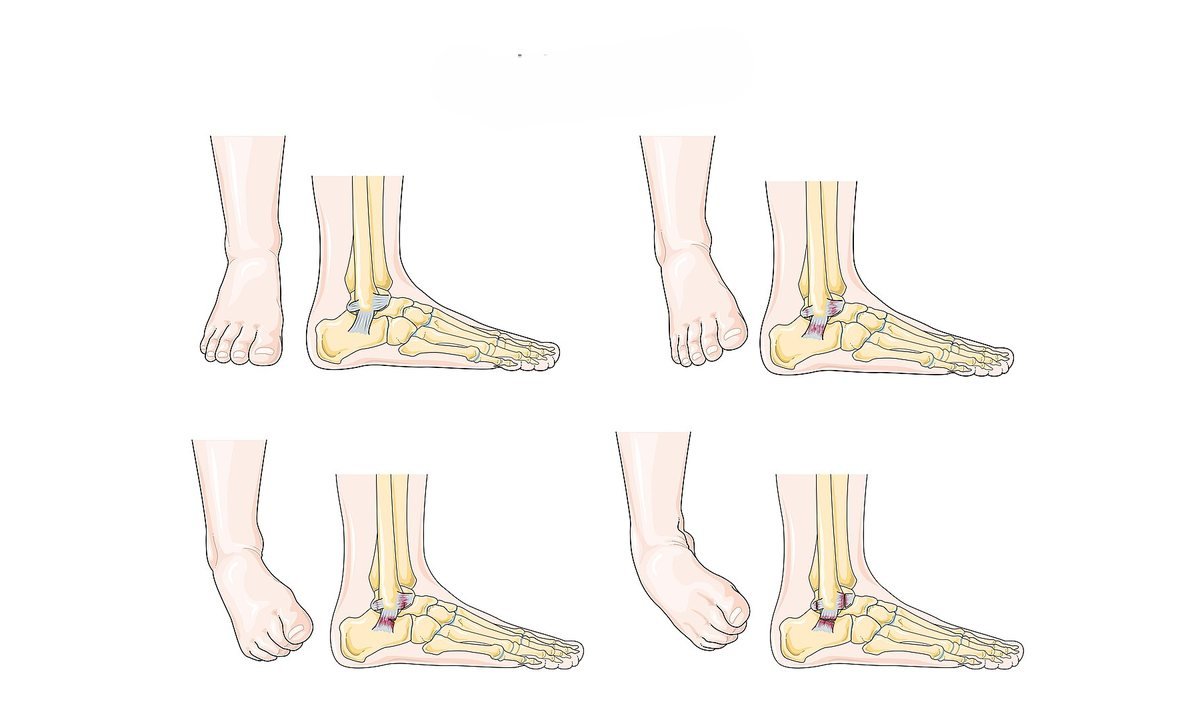
Your ankle is held together by bands of tough tissue called ligaments. They connect bone to bone and stop the joint moving further than it should.
The classic sprain happens when the foot rolls inwards — the sole turns to face the other foot and your weight comes down on the outside edge. That stretches the ligaments on the outside of the ankle. The one injured most often is the anterior talofibular ligament (ATFL), which runs from the bony knob on the outside of your ankle forwards to the foot. In a bigger roll, the ligament beneath it, the calcaneofibular ligament, can be injured too.
Less commonly, people injure:
- The inside of the ankle (the deltoid ligament), when the foot rolls outwards.
- The "high ankle" ligaments (the syndesmosis) that bind the two shin bones together just above the ankle. These usually come from a twisting injury with the foot planted — common in football — and typically take longer to recover.
Mild, moderate or severe? The three grades
Sprains are often described in three grades:
- Grade 1 (mild): the ligament is stretched with microscopic damage. Mild swelling and tenderness; you can usually walk with a limp.
- Grade 2 (moderate): a partial tear. More swelling and bruising, walking is painful, and the ankle may feel a little loose.
- Grade 3 (severe): a complete tear of one or more ligaments. Marked swelling and bruising, difficulty taking weight, and the ankle can feel unstable.
Grading is useful for planning, but it is rough. Two people with the "same" grade can recover at very different speeds, and the grade is often clearer a few days after the injury than on the day itself — which is why an international group of ankle researchers recommends a proper assessment once the initial swelling has settled.
Is it sprained or broken? When you need an X-ray
This is the question everyone asks first, and there is a well-tested way to answer it. The Ottawa ankle rules were developed by emergency doctors in Canada to decide which ankle injuries need an X-ray. In the original validation study, using them correctly picked up the clinically important fractures while avoiding many unnecessary X-rays.
An X-ray is generally recommended if there is pain around the ankle bones and any one of these:
- Tenderness when pressing along the back edge or tip of either ankle bone (the bony knobs on the inside and outside), over the lowest 6 cm
- Tenderness over the base of the fifth metatarsal — the bony bump halfway along the outside edge of your foot
- Tenderness over the navicular — the bony point on the inside of the midfoot
- Being unable to take four steps, both straight after the injury and when you are examined
Physiotherapists use these rules as part of an assessment, and if an X-ray is warranted we will tell you and point you to your GP or an imaging centre. Go to an emergency department straight away if your foot looks deformed, is cold, pale or numb, if a bone has come through the skin, or if the pain is severe and getting worse rather than better.
The first few days: what to do (and what not to)
For decades the advice was RICE — rest, ice, compression, elevation. The thinking has moved on. A widely shared 2020 editorial in the British Journal of Sports Medicine summed up the newer approach in its title:
“Soft-tissue injuries simply need PEACE and LOVE.”
— Dubois and Esculier, British Journal of Sports Medicine, 2020
PEACE is for the first one to three days:
- Protect — reduce load for a short time, using crutches or a brace if you need them. Short means days, not weeks.
- Elevate — rest the ankle higher than the heart when you can, to help fluid drain.
- Avoid anti-inflammatories — the editorial argues that inflammation is part of healing in the early days. Other guidelines accept a short course of anti-inflammatory medicine for pain relief, so check with your GP or pharmacist what suits you.
- Compress — a compression bandage or sleeve can help limit swelling.
- Educate — understand what has happened and what helps, so you are not chasing passive "quick fixes".
LOVE follows once the first few days have passed:
- Load — start putting weight through the ankle and moving it as pain allows. Pain is a guide, not a stop sign.
- Optimism — expectations matter. Most sprains recover well.
- Vascularisation — pain-free cardio, such as a bike or walking, keeps blood flowing.
- Exercise — restore movement, strength and balance with a structured programme.
What about ice?
Ice can take the edge off pain, and if it helps you that is a perfectly reasonable use of it. What it has not been shown to do is speed up healing. Use it for comfort, a few minutes at a time with a cloth between ice and skin, and do not let it replace gentle movement.
Should I keep walking on a sprained ankle?
Usually yes, once you can — as long as you are not limping badly or in a lot of pain. Guidelines for ankle sprains favour early functional treatment (supported movement and exercise) over long periods of immobilisation. In a trial published in the BMJ, people who started an accelerated exercise programme in the first week after a sprain had better ankle function in the short term than those given standard care.
If you cannot put weight through the foot at all, or every step is getting worse, get it assessed rather than pushing through.
Brace, tape or bandage?
For mild and moderate sprains, a lace-up brace or tape gives support while you get moving again, and guidelines prefer this "functional support" over immobilising the ankle.
For severe sprains there is good evidence that more support early on helps. In a large UK trial published in The Lancet, people with severe sprains who were given a below-knee cast for 10 days recovered faster than those given only a simple tubular compression bandage; a semi-rigid brace also did better than the bandage on some measures. The take-home is not that everyone needs a cast. It is that a severe sprain deserves more than a tubigrip and a "see how it goes".
A physiotherapist can help you decide which support suits your injury, and when to wean off it.
How long does a sprained ankle take to heal?
Typical ranges, if the ankle is rehabilitated properly:
| Sprain | Back to walking comfortably | Back to sport |
|---|---|---|
| Mild (grade 1) | A few days to 1 week | Around 1–3 weeks |
| Moderate (grade 2) | 1–3 weeks | Around 3–6 weeks |
| Severe (grade 3) | 2–6 weeks | Around 6–12 weeks, sometimes longer |
| High ankle sprain | Varies | Often longer than an equivalent outside-ankle sprain |
These are averages, not promises. And here is the part most people do not expect: "healed" and "recovered" are not the same thing. A review of how ankle sprains behave over time found that a substantial share of people still reported pain or instability a year or more after the injury, and many had sprained the same ankle again. The swelling going down does not mean the ankle is back to full strength and balance.
Why ankle sprains keep coming back
The strongest predictor of an ankle sprain is a previous ankle sprain. The International Ankle Consortium's evidence review reported that up to 40% of people who sprain an ankle go on to develop chronic ankle instability — repeated sprains, a sense of the ankle "giving way", and ongoing weakness.
Why? A sprain does more than stretch a ligament. The ligaments are packed with sensors that tell your brain where your foot is. When they are injured, that sense of position (called proprioception) and the speed of your protective reflexes can drop. The muscles around the ankle — particularly the ones on the outside of the shin that stop the foot rolling in — also weaken. Rest alone does not restore any of that. Specific training does.
The evidence for balance training
This is one of the best-supported treatments in all of sports physiotherapy. In a Dutch trial of athletes who had recently sprained an ankle, an eight-week, unsupervised home balance programme reduced the risk of spraining it again by about a third compared with usual care. Overviews of the research since have reached the same conclusion: exercise therapy, and especially balance work, reduces repeat sprains.
Ankle sprain rehab: what the exercises look like
Every programme should be tailored, but rehab usually moves through these stages. Do not jump ahead, and stop any exercise that sharply increases your pain.
Stage 1: calm it down and get it moving (first days)
- Ankle alphabet: sitting with the leg up, "write" the letters of the alphabet in the air with your big toe.
- Pumps: point and flex the foot slowly, 20 times, several times a day.
- Walking as normally as pain allows, with support if needed.
Stage 2: restore movement and strength (roughly weeks 1–3)
- Calf stretch against a wall, knee straight and then bent.
- Resistance band work in all four directions, especially turning the foot outwards against the band.
- Double then single heel raises, building to slow, controlled sets.
Stage 3: balance and control
- Single-leg stance for 30 seconds, near a bench for safety.
- Make it harder: eyes closed, on a pillow or cushion, or while catching a ball.
- Reaching drills: stand on the injured leg and reach the other foot forwards, sideways and backwards.
Stage 4: get back to sport
- Jogging, then running with direction changes, figure-eights and side-steps.
- Hopping and landing: double-leg, then single-leg, forwards and sideways.
- Sport-specific drills before full training, and full training before a game.
As a guide, people are usually ready to return to sport when they can hop repeatedly on the injured leg without pain, balance on it as well as on the other side, and cut and change direction at full speed with confidence.
Common myths about sprained ankles
- "It's only a sprain, it'll be fine." Often true for a mild one, but sprains are the most common route into long-term ankle instability.
- "Rest it until it stops hurting." Long rest weakens the ankle further. Early, gradual loading is what the evidence supports.
- "If I can walk on it, it can't be broken." Some fractures, such as at the base of the fifth metatarsal, still let you walk. Use the Ottawa rules above.
- "A brace will make my ankle weak." A brace used during recovery and for sport after a sprain does not stop you rehabilitating; it protects you while you do.
- "Once the swelling's gone, I'm done." Swelling settles long before balance and strength return. That gap is where re-injury happens.
When should you see a physio for a sprained ankle?
It is worth booking in if:
- You still cannot walk normally after a few days
- The swelling or bruising is large, or not improving after a week
- The ankle feels unstable or "gives way"
- You have sprained the same ankle before
- You play sport and want to get back safely, and not re-injure it in your first game
- It has been weeks, it "sort of" healed, but it is still not right
What happens at your appointment
At UpPlus Physiotherapy in Seaton, an ankle assessment usually includes:
- Checking for signs of a fracture using the Ottawa rules, and referring for imaging if needed
- Identifying which ligaments are involved, and grading the sprain
- Testing movement, strength, balance and how you walk and hop
- Hands-on treatment where it helps, alongside taping or bracing advice
- A written, staged exercise programme you can do at home, with clear milestones for returning to work and sport
You can read more about how we treat ankle sprains and other sports injuries, and about our exercise rehabilitation.
How do I find a good physio near me for a sprained ankle?
When people search for the best physio for an ankle sprain, the things that genuinely make a difference are:
- An assessment, not just a treatment. They should check for fractures and test your balance and strength, not only the sore spot.
- A plan built on exercise. Hands-on treatment can help pain, but exercise is what prevents the next sprain.
- Clear milestones for returning to work and sport, rather than open-ended appointments.
- Somewhere close enough that you will actually go for follow-ups.
If you are looking for a physio near me in Adelaide's west, our clinic at 177 Trimmer Parade, Seaton, is a short drive from Henley Beach, Grange, West Lakes, Findon and Woodville. You do not need a referral, and if you have private health cover with physio extras you can claim on the spot and pay only the gap. If you hurt your ankle at work, we also see work injury claims.
Physio take-home message
- Most ankle sprains recover well — but recovery means strength and balance, not just less swelling.
- Move early. Protect it for a few days, then load it gradually as pain allows.
- Check for a fracture if you cannot take four steps or the ankle bones themselves are tender.
- Do the balance training. It is the best-proven way to stop the next sprain.
- A previous sprain is the biggest risk for the next one — if this is not your first, get it properly assessed.
If your ankle is not settling, or you want a clear plan to get back to sport without re-injuring it, our physiotherapists can help. You can book online in a couple of minutes, or call us on 0403 907 587.
This article is general information, not a diagnosis or a substitute for an individual assessment. If you are unsure about an injury, see a health professional.